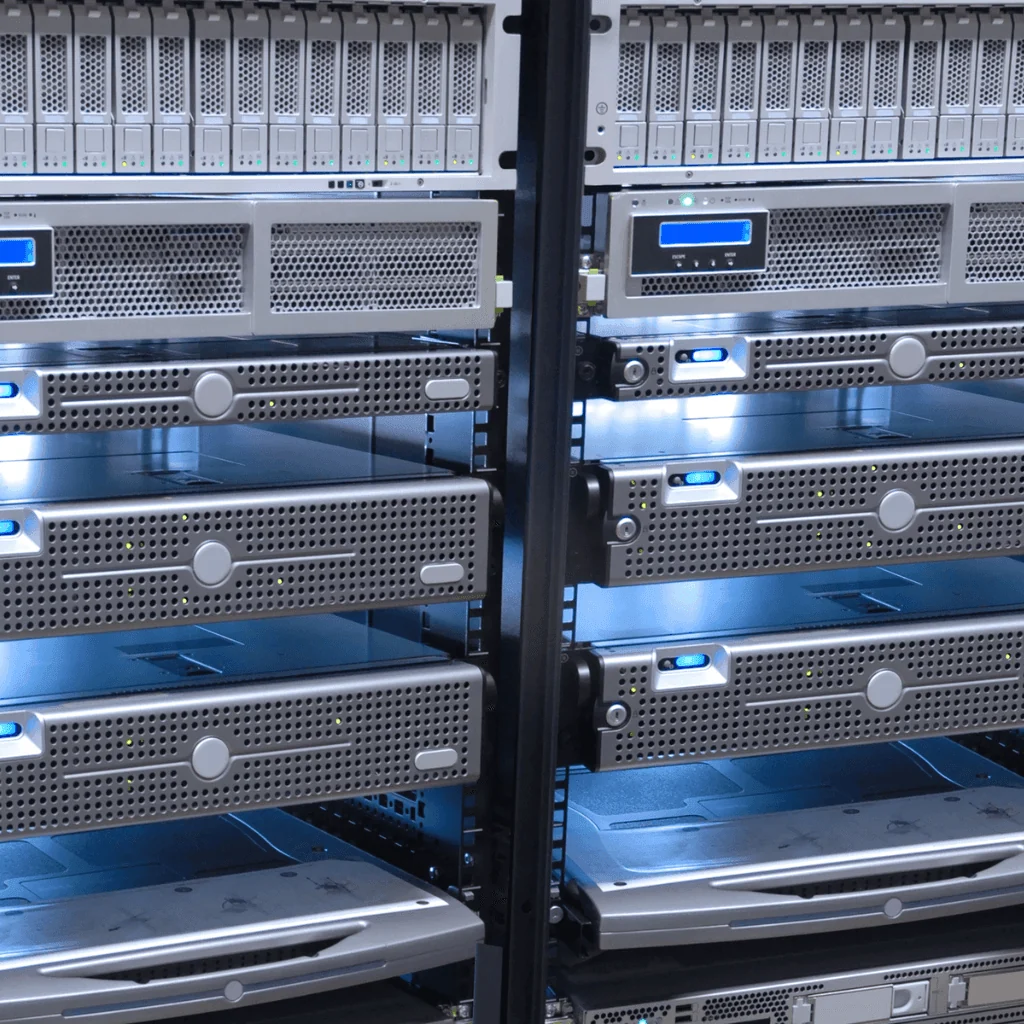
Homelab forums are full of enthusiastic recommendations for decommissioned enterprise switches, servers, and storage arrays available at steep discounts on the secondhand market. Deciding between refurbished enterprise gear and new consumer hardware for your homelab involves real tradeoffs that forum enthusiasm doesn’t always represent fairly.
The Case for Refurbished Enterprise Gear
- Significant cost savings – decommissioned enterprise hardware often sells for a fraction of its original price, sometimes offering specs far beyond what similarly-priced new consumer hardware provides
- Genuinely robust build quality – enterprise hardware is typically engineered for continuous operation and physical durability well beyond typical consumer product lifespans
- Advanced features at consumer prices – ECC RAM support (), redundant power supplies, and IPMI () are often standard on enterprise gear that would require a real premium in equivalent new consumer products
The Case Against Refurbished Enterprise Gear
- Power consumption – enterprise hardware from even a few years ago often idles at significantly higher wattage than modern efficiency-focused consumer alternatives (the power consumption tradeoffs apply directly here)
- Noise – enterprise cooling is engineered for data center environments with acoustic requirements very different from a home office or living space, often resulting in truly loud operation unsuitable for noise-sensitive locations
- Unknown remaining lifespan – you’re inheriting hardware with an unknown history of actual usage hours and wear, with no warranty coverage in most cases
- Physical size and weight – real enterprise servers are often large, heavy rackmount units, tying directly into the rackmount vs tower considerations
The Case for New Consumer Hardware
- Predictable power efficiency – modern consumer hardware, particularly mini PCs and recent embedded platforms, is specifically engineered around low idle power draw
- Quieter by design – consumer hardware and cases generally prioritize acoustic comfort more than enterprise equivalents
- Warranty coverage – real manufacturer warranty protection, absent from most secondhand enterprise purchases
- Known, fresh component lifespan – no inherited wear or unknown operational history
The Case Against New Consumer Hardware
- Higher cost per unit of raw performance – equivalent compute and RAM capacity generally costs significantly more than comparable secondhand enterprise options
- Fewer advanced features – ECC RAM support and IPMI-equivalent remote management are less commonly available on mainstream consumer platforms, or require stepping up to pricier prosumer/workstation options
A Practical Middle Ground: Enterprise-Grade at Small Scale
Some manufacturers sell smaller, desktop-form-factor versions of real enterprise-grade hardware (certain Supermicro and Dell workstation-class options, for instance) — offering ECC support and server-grade reliability without the full rackmount enterprise server’s size, noise, and power draw, at a price between full enterprise gear and typical consumer alternatives.
Matching the Choice to Your Actual Priorities
- Prioritizing absolute lowest cost per performance, willing to accept noise/power tradeoffs → refurbished enterprise gear, ideally verified for reasonable idle power draw before committing
- Prioritizing quiet, low-power, always-on operation in a shared living space → new consumer hardware, particularly modern mini PCs
- Wanting ECC and IPMI-equivalent features without full enterprise server tradeoffs → workstation-class or small-form-factor server-grade options as a middle ground
- Already have decent hardware sitting unused → the repurposed gaming PC or thin client options covered in earlier guides, before buying anything new or refurbished at all
Verifying Refurbished Gear Before Committing
If going the refurbished route, specifically check: actual idle power draw (measured directly, not assumed from spec sheets), fan noise level in practice (not just spec-sheet dB ratings, which don’t always reflect real subjective loudness), and where possible, purchase from sellers offering at least a short return window or basic testing period given the complete absence of manufacturer warranty coverage.
Final Thoughts
Choosing between refurbished enterprise gear and new consumer hardware for your homelab comes down honestly weighing raw cost-per-performance against power consumption, noise, and warranty considerations that matter differently depending on where your homelab actually lives and how much you value predictable, quiet operation. Neither choice is universally correct — the right answer depends really on your specific priorities, physical space, and tolerance for the tradeoffs each path involves.
Leave a Reply