How to Set Up VLANs for Home Lab Network Segmentation
Running everything — your laptop, IoT devices, and homelab servers — on a single flat network means a compromised smart device could potentially reach your entire infrastructure. Setting up VLANs for home lab network segmentation solves this by creating isolated virtual networks on the same physical hardware, keeping different types of devices separated even though they share the same switch and router.
What Is a VLAN?
A VLAN (Virtual Local Area Network) allows a single physical network switch to be logically divided into multiple separate networks. Devices on different VLANs can’t communicate directly with each other unless explicitly allowed through routing rules, even though they’re plugged into the same physical switch — effectively giving you the isolation benefits of separate physical networks without needing separate physical hardware for each one.
Why Segment Your Home Lab Network
- IoT isolation – smart devices with questionable security practices stay separated from sensitive homelab services and personal devices
- Guest network separation – visitors get internet access without any visibility into your internal network
- Service tiering – separate your management interfaces (Proxmox web UI, PBS, switch admin panels) from general-purpose traffic
- Reduced attack surface – if one segment is compromised, the damage is contained rather than spreading network-wide
Requirements for VLANs
You’ll need networking hardware that explicitly supports VLAN tagging (802.1Q):
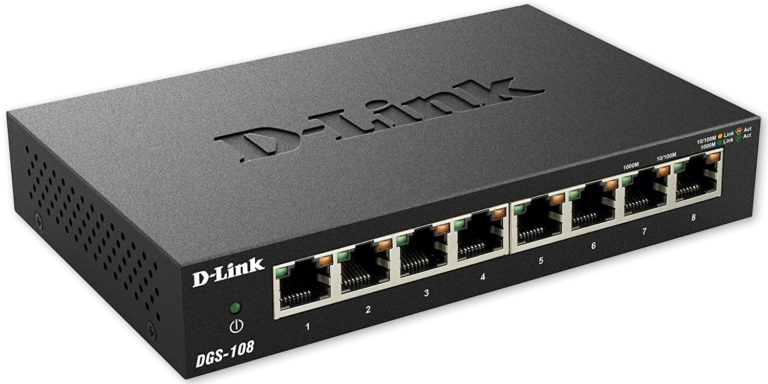
- A managed switch capable of VLAN configuration (unmanaged switches cannot create VLANs)
- A router or firewall capable of routing between VLANs (pfSense, OPNsense, or a capable consumer router with VLAN support)
- Network interfaces on your servers that support VLAN tagging, either natively or through configuration in Linux
Planning Your VLAN Structure
A common starting layout for a homelab might include:
- VLAN 1 (Management) – switch admin interfaces, Proxmox web UI, PBS
- VLAN 10 (Trusted/Personal Devices) – laptops, phones, personal computers
- VLAN 20 (IoT) – smart plugs, cameras, smart speakers
- VLAN 30 (Servers) – homelab VMs and containers running actual services
- VLAN 99 (Guest) – visitor devices with internet-only access
Configuring VLANs on a Managed Switch
Log in to your switch’s admin interface and create the VLAN IDs matching your planned structure. Assign each physical port to the appropriate VLAN, or configure “trunk” ports (which carry multiple VLANs tagged together) for connections to your router and any devices, like a Proxmox host, that need to participate in multiple VLANs simultaneously.
Configuring VLAN Interfaces in Linux (Proxmox Example)
If a Proxmox host needs a network interface on a specific VLAN, this is configured directly in the network settings. Using the Proxmox web interface, add a new Linux VLAN device specifying the parent interface and VLAN tag, or edit /etc/network/interfaces directly:
auto vmbr0.30
iface vmbr0.30 inet static
    address 192.168.30.10/24
Setting Up Inter-VLAN Routing Rules
On your router or firewall, define which VLANs are allowed to communicate with each other and in which direction. A typical rule set might allow the Trusted VLAN to reach the Servers VLAN, while blocking the IoT VLAN from initiating any connection to Servers or Trusted devices entirely.
Testing Segmentation
After configuration, verify isolation is actually working as intended — attempt to ping or connect from a device on the IoT VLAN to a device on the Servers VLAN and confirm the connection is blocked, while allowed paths (like Trusted to Servers) work as expected.
Final Thoughts
Implementing VLANs for home lab network segmentation meaningfully reduces your exposure if any single device on your network is ever compromised, particularly relevant given how many IoT devices have historically weak security. While the initial setup takes some planning and compatible hardware, the resulting network architecture brings your homelab’s security posture much closer to genuine enterprise practices.